
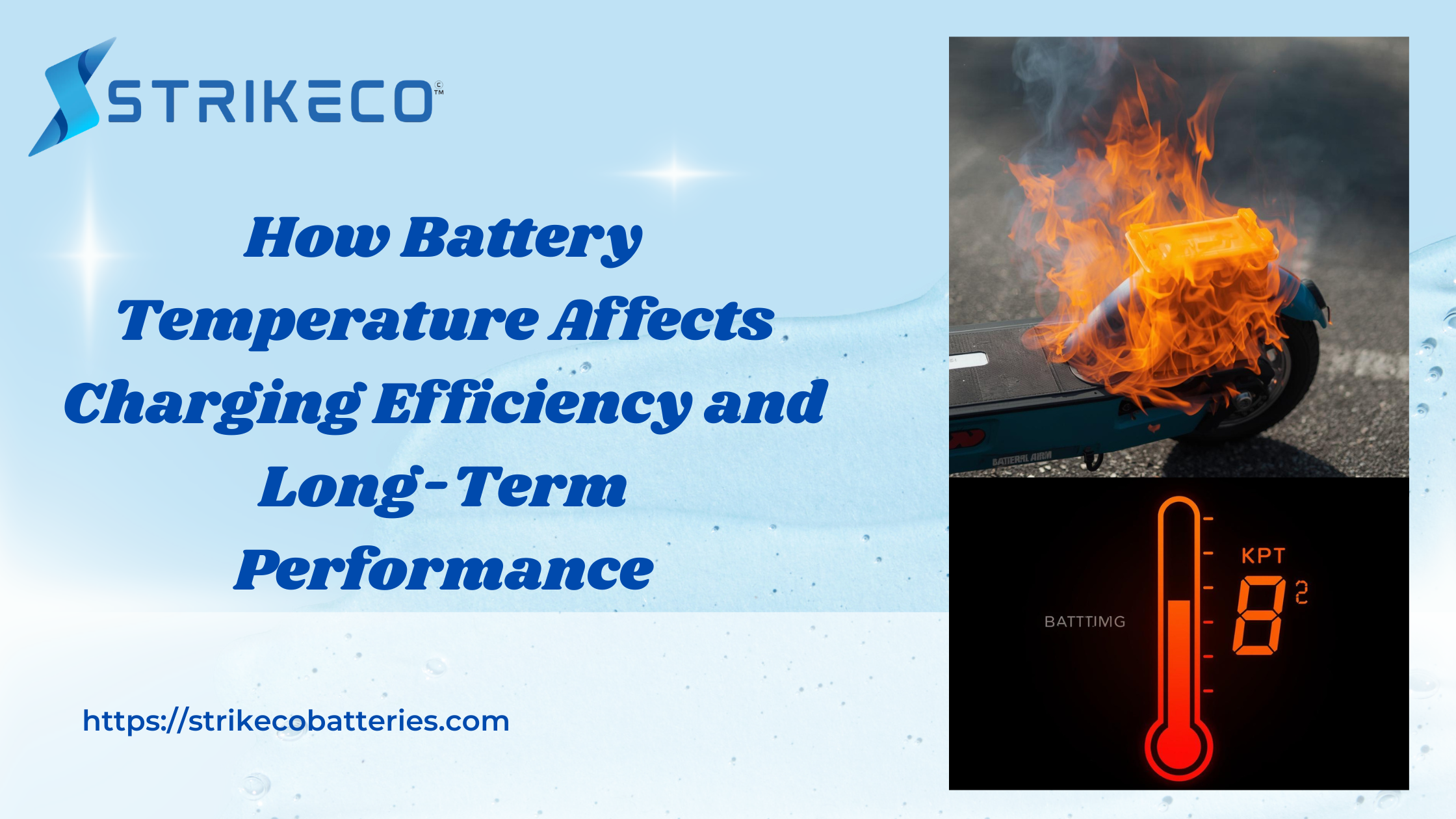
How Battery Temperature Affects Charging Efficiency and Long-Term Performance
Battery performance is heavily influenced by temperature. Whether it is an inverter battery, automotive battery, solar backup system, or industrial energy storage unit, temperature directly impacts charging efficiency, battery lifespan, discharge behavior, and overall safety.
In India, where climate conditions range from intense summer heat to high humidity and seasonal fluctuations, understanding battery temperature management has become increasingly important for both residential and commercial users.
Many battery failures are not caused by manufacturing defects alone. Instead, excessive heat, poor ventilation, overcharging, and improper storage conditions gradually reduce battery health over time.
This guide explains how battery temperature affects charging efficiency, why thermal management matters, and how users can improve long-term battery performance using proper maintenance practices.
For advanced battery solutions and reliable energy storage systems, users can explore https://strikecobatteries.com.
Why Temperature Matters in Battery Performance
Every battery operates through electrochemical reactions. Temperature directly affects the speed and stability of these chemical processes.
Inside a battery:
- Electrolytes transfer ions
- Electrodes store and release energy
- Internal resistance changes continuously
When temperature rises or falls beyond optimal levels, these reactions become unstable, reducing efficiency and accelerating degradation.
Most batteries are designed to operate best between:
- 20°C to 30°C
Extreme temperatures outside this range can significantly affect:
- Charging speed
- Energy retention
- Battery lifespan
- Safety performance
Understanding Battery Charging Efficiency
Charging efficiency refers to how effectively a battery converts incoming electrical energy into stored usable energy.
High charging efficiency means:
- Faster charging
- Less energy loss
- Reduced heat generation
- Better long-term health
Temperature plays a critical role in determining this efficiency.
Effects of High Temperature on Batteries
Heat is one of the biggest enemies of battery longevity.
1. Increased Chemical Activity
At higher temperatures, internal chemical reactions accelerate rapidly.
Initially, this may appear beneficial because:
- Charging becomes faster
- Internal resistance decreases
However, prolonged exposure creates serious long-term damage.
2. Faster Battery Degradation
Excessive heat speeds up:
- Electrode corrosion
- Electrolyte evaporation
- Internal material breakdown
This leads to:
- Reduced capacity
- Lower backup time
- Shortened lifespan
In lead acid batteries, high temperatures accelerate water loss inside the electrolyte solution.
3. Thermal Runaway Risk
In severe cases, overheating may trigger:
- Thermal runaway
This occurs when:
- Heat generation exceeds heat dissipation
- Internal temperature rises uncontrollably
Thermal runaway can cause:
- Swelling
- Leakage
- Fire hazards
- Permanent battery damage
Modern battery management systems (BMS) help reduce this risk in advanced batteries.
How Cold Temperature Impacts Battery Charging
Low temperatures also create performance challenges.
1. Increased Internal Resistance
Cold weather slows chemical reactions inside the battery.
As a result:
- Charging becomes slower
- Voltage delivery decreases
- Efficiency drops
Users often notice reduced backup time during colder conditions.
2. Incomplete Charging
When batteries charge in very cold environments:
- Electrolytes become less active
- Ion movement slows down
This prevents full energy storage and reduces usable capacity.
3. Reduced Discharge Performance
Cold batteries struggle to deliver high current efficiently.
This affects:
- Vehicle starting power
- Inverter backup
- Solar battery systems
Although India mainly faces heat-related issues, colder northern regions may experience seasonal battery inefficiencies.
Battery Types and Temperature Sensitivity
Different battery chemistries respond differently to temperature.
Lead Acid Batteries
Lead acid batteries remain widely used for:
- Inverters
- UPS systems
- Automotive applications
Heat Effects:
- Faster electrolyte evaporation
- Sulfation acceleration
- Plate corrosion
Cold Effects:
- Reduced charging acceptance
- Lower cranking power
Proper ventilation is essential for maintaining lead acid battery health.
Lithium-Ion Batteries
Lithium-ion batteries are increasingly common due to:
- Higher energy density
- Faster charging
- Longer cycle life
However, lithium batteries are highly temperature-sensitive.
High Heat Risks:
- Thermal instability
- Capacity loss
- Safety concerns
Low Temperature Risks:
- Lithium plating
- Charging inefficiency
- Internal damage
Advanced BMS technology helps regulate charging and temperature conditions.
Battery Charging Cycles and Temperature
A charging cycle refers to:
- One complete discharge and recharge process
Temperature directly affects cycle life.
High Temperature:
- Reduces total charging cycles
- Accelerates aging
Moderate Temperature:
- Maintains stable cycle performance
- Extends battery lifespan
Repeated exposure to heat gradually lowers total usable cycles over time.
Why Indian Climate Conditions Matter
India presents unique battery performance challenges.
Summer Heat
In many Indian regions:
- Temperatures exceed 40°C
This causes:
- Faster electrolyte evaporation
- Increased internal pressure
- Reduced charging efficiency
Poor ventilation worsens these problems significantly.
Humidity and Monsoon Conditions
High humidity may lead to:
- Terminal corrosion
- Moisture exposure
- Electrical inefficiency
Proper installation environments are critical for battery durability.
Urban Heat and Indoor Installations
Batteries installed:
- Near walls
- In enclosed rooms
- Without airflow
often experience trapped heat buildup.
Ventilation plays a major role in thermal stability.
Battery Management Systems (BMS)
Modern batteries increasingly rely on:
- Battery Management Systems
BMS technology helps:
- Monitor temperature
- Prevent overcharging
- Balance charging cycles
- Protect against overheating
Smart thermal management significantly improves safety and longevity.
How Fast Charging Increases Heat
Fast charging technology is convenient but generates additional thermal stress.
Higher charging currents produce:
- Increased heat generation
- Faster internal wear
- Greater stress on electrodes
Repeated aggressive charging may:
- Reduce lifespan
- Increase degradation speed
Balanced charging practices improve long-term battery health.
Signs of Temperature-Related Battery Damage
Users should monitor for warning signs such as:
- Excessive battery heating
- Swelling or deformation
- Reduced backup time
- Slow charging
- Acid leakage
- Corroded terminals
- Frequent charging needs
Early identification prevents complete battery failure.
Best Practices for Battery Temperature Management
1. Ensure Proper Ventilation
Always install batteries in:
- Cool
- Dry
- Well-ventilated spaces
Avoid enclosed heat-trapping environments.
2. Avoid Overcharging
Overcharging increases internal temperature dramatically.
Use:
- Smart chargers
- Auto-cut charging systems
- Certified charging equipment
3. Keep Batteries Away from Direct Sunlight
Direct heat exposure accelerates degradation.
Indoor shaded installation is ideal.
4. Monitor Charging Conditions
Avoid charging batteries:
- Immediately after heavy discharge
- In extremely hot environments
Allow cooling periods when necessary.
5. Perform Regular Maintenance
For lead acid batteries:
- Check electrolyte levels
- Clean terminals
- Inspect ventilation
Preventive maintenance improves lifespan significantly.
Future of Battery Thermal Management
Battery technology continues evolving rapidly.
Emerging innovations include:
- AI-based thermal monitoring
- Solid-state batteries
- Advanced cooling systems
- Smart charging algorithms
- Heat-resistant battery materials
These advancements aim to:
- Improve safety
- Extend lifespan
- Increase charging efficiency
Thermal management will remain one of the most important aspects of next-generation energy storage systems.
Why Temperature Awareness Improves Battery ROI
Battery replacement costs can be significant.
Poor temperature management often leads to:
- Early battery failure
- Increased maintenance
- Lower efficiency
- Reduced backup reliability
Users who understand thermal effects typically achieve:
- Longer battery lifespan
- Better charging efficiency
- Improved energy savings
- Reduced replacement frequency
Proper care directly improves return on investment.
Battery temperature plays a crucial role in charging efficiency, safety, and long-term performance. Excessive heat accelerates degradation, while cold conditions reduce charging effectiveness and energy delivery.
In India’s demanding climate conditions, proper thermal management is essential for maximizing battery reliability and lifespan.
Simple practices such as:
- Proper ventilation
- Smart charging
- Avoiding overcharging
- Monitoring heat exposure
can significantly improve battery performance over time.
As battery technology continues advancing, users who prioritize temperature management will experience better efficiency, lower maintenance costs, and more dependable power backup systems.
For reliable battery technologies and advanced energy storage solutions, users can explore https://strikecobatteries.com.
