
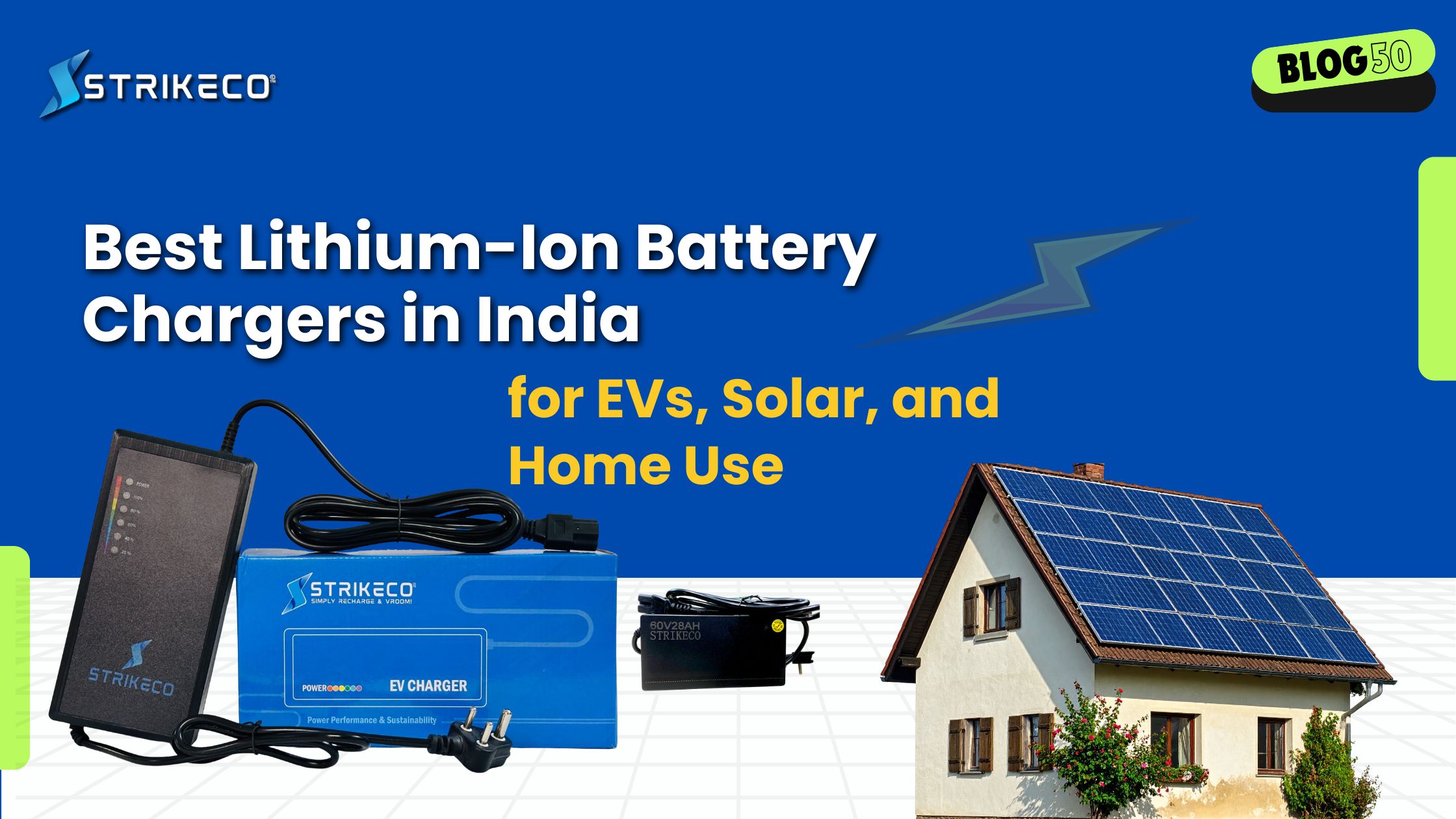
Best Lithium-Ion Battery Chargers in India for EVs, Solar, and Home Use
1.Why the Right Lithium-Ion Charger Matters
Lithium-ion batteries have become the backbone of modern energy systems in India. From electric vehicles and solar power setups to home energy storage, these batteries are now a part of everyday life. However, while most buyers focus heavily on battery specifications, the charger often doesn’t receive the same attention—even though it plays a critical role in overall performance.
A well-designed lithium-ion battery charger ensures faster charging, better safety, and longer battery life. On the other hand, using an unsuitable charger can reduce efficiency, increase heat stress, and shorten the battery’s lifespan. As demand continues to grow, choosing the right charger has become essential for reliable and safe power usage.
2. Understanding Lithium-Ion Battery Charging
Lithium-ion batteries store and release energy through a controlled movement of lithium ions within the battery. Unlike older battery technologies, they are highly sensitive to voltage, current, and temperature during charging.
To protect the battery, lithium-ion chargers follow a precise charging sequence. The process begins with a steady flow of current and gradually slows down as the battery approaches full capacity. This controlled approach helps prevent overheating and internal stress, making charger quality extremely important.
3. Where Lithium-Ion Battery Chargers Are Used Today
Electric Vehicles (EVs)
Electric scooters, bikes, and other EVs rely on lithium-ion batteries for their lightweight design and high energy efficiency. Chargers used in EVs must support frequent charging cycles and deliver stable power output.
Solar Power Systems
Lithium-ion batteries are increasingly paired with rooftop and off-grid solar setups. Chargers in these systems must handle power fluctuations while ensuring safe and consistent energy storage.
Home and Portable Energy Solutions
From backup power units to portable energy devices, lithium-ion chargers are now common in homes. These chargers must balance safety, convenience, and efficiency for everyday use.
4. Key Features to Look for in Lithium-Ion Battery Chargers
Choosing the right charger goes beyond price. Some of the most important features include:
- Voltage and Current Compatibility: The charger must match the battery’s rated voltage and recommended current range.
- Fast Charging Capability: Faster charging is useful, but it should never compromise battery safety.
- Smart Charging Control: Chargers that automatically regulate power flow help reduce battery stress.
- Automatic Cut-Off Protection: Prevents overcharging by stopping power flow once the battery is full.
- Thermal and Electrical Safety: Protection against overheating, short circuits, and incorrect connections is essential.
5. Fast Charging Lithium Battery Chargers: What You Should Know
Fast charging has become increasingly popular, especially among EV users. These chargers significantly reduce charging time but also generate more heat during operation.
Well-designed fast chargers manage this heat by controlling power delivery and gradually slowing down as the battery reaches full capacity. While fast charging is ideal for daily commuting or quick top-ups, standard smart charging is often better for overnight or long-duration charging.
6. Choosing the Right Charger for Different Applications
For EVs:
Chargers should support frequent use, stable current delivery, and effective heat management.
For Solar Systems:
Chargers must handle variable input power and work seamlessly with solar controllers.
For Home Use:
Compact design, quiet operation, and automatic safety features make chargers suitable for residential environments.
Selecting a charger based on application ensures safety and long-term performance.
7. Common Mistakes Buyers Make When Purchasing Chargers
Many buyers unknowingly make mistakes that affect battery life and safety:
- Ignoring voltage and current compatibility
- Choosing low-cost chargers without safety certifications
- Prioritizing speed over battery protection
- Assuming one charger works for all lithium-ion batteries
Avoiding these mistakes helps protect both your battery and your investment.
8. Buying Lithium-Ion Chargers Online: What to Check
When purchasing a charger online, always look for:
- Clear technical specifications and compatibility details
- Recognized safety certifications
- Warranty coverage and service support
- Verified seller reviews and ratings
Reliable online platforms provide transparency and post-purchase support.
9. Safety and Maintenance Tips for Long-Term Performance
To keep your charger working efficiently:
- Use it in a cool, dry, and well-ventilated area
- Avoid exposure to moisture or excessive heat
- Disconnect once charging is complete
- Regularly inspect cables and connectors for damage
Simple care practices can significantly extend charger life.
As lithium-ion batteries continue to power EVs, solar installations, and homes across India, choosing a reliable charger becomes increasingly important. The right charger enhances safety, improves efficiency, and protects battery health over time.
Instead of focusing only on fast charging or low prices, prioritize compatibility, protection features, and long-term reliability. A thoughtfully chosen charger ensures dependable power today and peace of mind for the future.
